
How to Choose a Luxury Plot in Bangalore: 10 Things to Check Before Buying
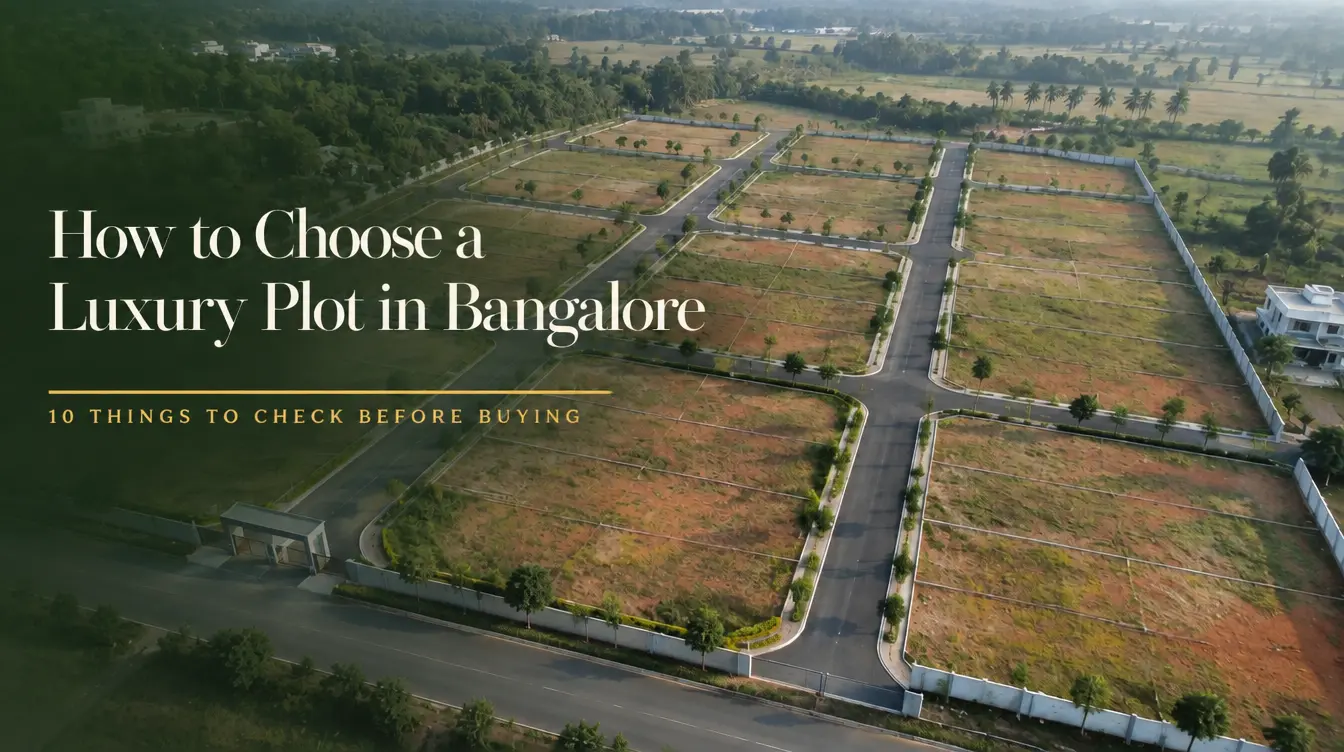
Most buyers searching for luxury plots in Bangalore are really asking a narrower question: how do you tell a genuinely well-located, well-documented plot apart from an ordinary plot that has simply been priced and marketed as premium? Size, gated-community branding and a high price tag are not proof of quality. They are marketing signals, and marketing signals need to be verified.
A luxury plot can be one of the strongest long-term real-estate decisions you make in Bangalore, provided you know what to check before signing on. This guide walks through the ten checks that matter most, so you can move forward with confidence.
Who This Guide Is For
This is written for buyers evaluating plots typically priced upward of ₹1 crore in Bangalore's established or emerging growth corridors: first-time luxury buyers, NRIs assessing options remotely, and existing apartment owners considering a move into land. The checks below apply whether you're buying to build a residence or to hold as a long-term investment.
10 Things to Verify Before Buying
1. Layout approval status. Confirm the layout is approved by BDA, BMRDA, STRR Planning Authority, or the relevant local planning authority for that survey. An unapproved "revenue layout" carries serious legal and resale risk regardless of how premium it looks.
2. Land conversion (NA status). Agricultural land must be legally converted for non-agricultural use before residential construction. Ask for the actual conversion order, not just a verbal assurance.
3. RERA registration. For layouts above the threshold size, check RERA registration on the Karnataka RERA portal. This gives you an independent record of the project's legal status and any complaints filed.
4. Survey number and boundary documentation match
Survey number consistency. Check that the survey number on the sale deed, RTC, layout plan and physical site match exactly. Survey numbers get subdivided over time, and a mismatch here is often the first sign of a documentation problem.
5. RTC and Mutation records. The Record of Rights, Tenancy and Crops (RTC/Pahani) and mutation entries should reflect the current owner. Mismatches often indicate unresolved succession or partition issues.
6. Actual plot dimensions and boundaries. Independently verify dimensions through a survey rather than relying on the brochure or sale layout plan alone. Boundary disputes are common on the edges of large layouts.
7. Core infrastructure: water, roads, drainage, power. Understand the actual (not projected) status of Cauvery water connection versus borewell dependency, approved road widths, stormwater/sewage handling, and sanctioned electrical load. Brochures describe the plan; ask what is actually built today.
8. Developer or landowner structure. Understand whether you are buying from the actual landowner, a Power of Attorney holder, or a joint development arrangement. A direct sale from the registered owner is usually the simplest and smoothest path.
9. Micro-location fundamentals. Proximity to a tech corridor or upcoming metro line matters, but so does the layout's position within that micro-location. A plot two roads off the highlighted corridor can behave very differently in resale.
10. Total cost and realistic exit assumptions. Stamp duty, registration, brokerage, khata transfer and utility connection charges typically add several percentage points to the headline price. Combine this with a realistic view of who buys this plot from you in 7-10 years, and at what price basis.
Why a Well-Chosen Plot Is a Strong Long-Term Asset
A well-located, properly approved plot offers real advantages: direct control over construction, no maintenance dependency on a builder, and land value that isn't tied to a structure's age or condition. In corridors with genuine infrastructure investment (new roads, metro extensions, IT park expansion), those fundamentals matter more than the "luxury" label, which is exactly why these ten checks exist: they're what turn a promising plot into a confident purchase.
Two factors are worth keeping in view as you evaluate timelines: land doesn't generate rental income while you hold it, and "growth corridor" positioning works best when it's backed by infrastructure that's already underway rather than only planned.
A Practical Due-Diligence Sequence
- Shortlist the layout and request all approval documents in writing.
- Have an independent lawyer review title, EC and mutation records, not the developer's in-house legal team.
- Physically visit the site and verify boundaries, road access and utility status yourself.
- Calculate the fully loaded cost, including stamp duty, registration and connection charges.
- Cross-check RERA status and any litigation history before making payment.
Frequently Asked Questions
Is a "luxury" plot always a good investment?
No. The label reflects pricing and amenities, not legal or locational quality. Both need to be verified independently.
Are GPA-based plot sales risky?
They can be. A Power of Attorney sale is not the same as a direct sale from the registered owner, and it requires closer legal scrutiny of the underlying authorization.
Does RERA registration guarantee the layout is problem-free?
No. RERA registration confirms certain disclosures and compliance requirements have been met, but it does not replace independent legal and physical due diligence.
How much should I budget beyond the plot price?
Stamp duty, registration, brokerage and connection charges commonly add several percentage points to the base price. Confirm this for the specific layout before you commit.
Conclusion
A luxury plot in Bangalore can be a genuinely rewarding purchase, for use or for the long term, once the fundamentals are confirmed. Work through these ten checks, and you'll be buying with the same confidence as a seasoned investor: informed, prepared, and ready to move forward.